How to Store Sneakers Without Yellowing: 10 Proven Tips
Protect your collection from oxidation and yellowing. Learn the best ways to store sneakers long-term — using silica gel, UV bags, and proper display methods.
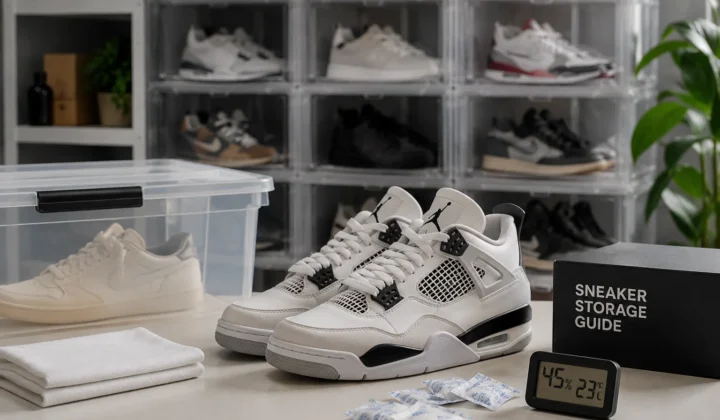
How to Store Sneakers Without Yellowing
If you’ve invested in limited-edition sneakers or everyday favorites, learning how to store sneakers without yellowing is one of the best ways to protect their value and appearance. White midsoles, translucent outsoles, and light-colored materials can gradually develop yellow stains over time due to oxidation, ultraviolet (UV) light, heat, and humidity. Even unworn sneakers can discolor if they’re stored incorrectly.
Whether you own Nike Dunk, Air Jordan 1, Adidas Yeezy, New Balance 990, or classic Converse Chuck Taylor sneakers, proper storage helps preserve both performance and resale value. The good news is that preventing yellowing doesn’t require expensive equipment. A few simple habits—such as controlling moisture, limiting sunlight, and using the right storage containers—can dramatically slow the aging process.
In this guide, you’ll learn the most effective methods for long term sneaker preservation, discover practical sneaker storage ideas, and understand how to prevent sole yellowing before it starts.
Quick Answer
To store sneakers without yellowing, keep them in a cool, dry, and dark environment. Avoid direct sunlight, excessive heat, and high humidity. Use silica gel packets to absorb moisture, breathable storage containers or UV-resistant display boxes, and clean sneakers thoroughly before storing them. Rotating pairs occasionally also helps reduce long-term oxidation.
Why Sneakers Turn Yellow
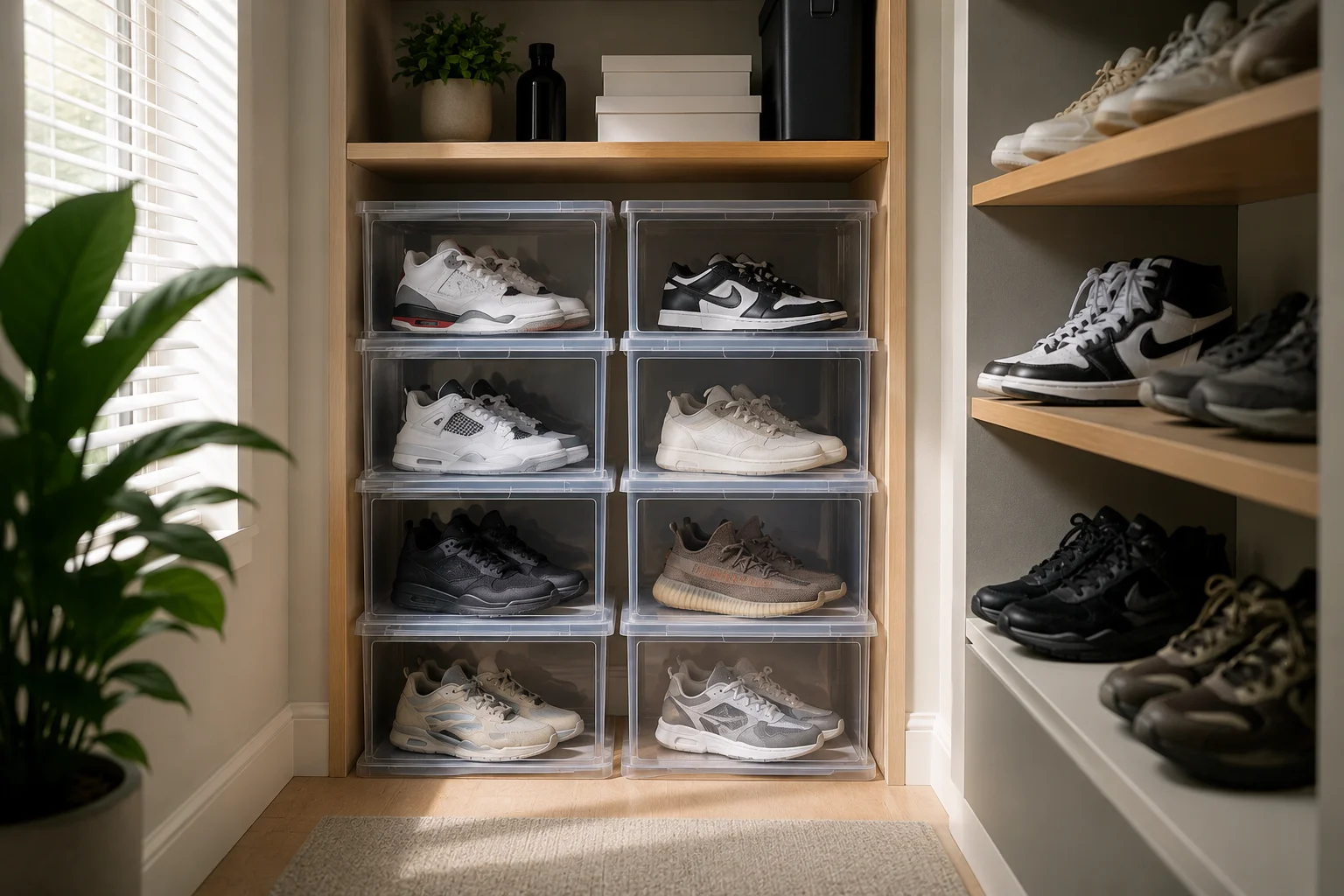
Yellowing is primarily caused by oxidation, a natural chemical reaction between oxygen and sneaker materials. Several factors accelerate this process:
- Exposure to UV light
- High temperatures
- Moisture and humidity
- Dust and environmental pollutants
- Body oils and dirt left on the shoes
Translucent rubber soles are especially prone to discoloration, but white foam midsoles and synthetic materials can also yellow over time.
Clean Sneakers Before Storage
Never store dirty sneakers for months at a time. Dirt, sweat, and oils can react with materials and speed up discoloration.
Best cleaning routine
- Brush away loose dirt.
- Use mild soap and warm water for midsoles.
- Clean uppers according to the material.
- Allow sneakers to air dry completely.
- Never store damp shoes.
Proper cleaning is one of the easiest ways to prevent sole yellowing and extend the lifespan of every pair.
Choose the Right Storage Environment
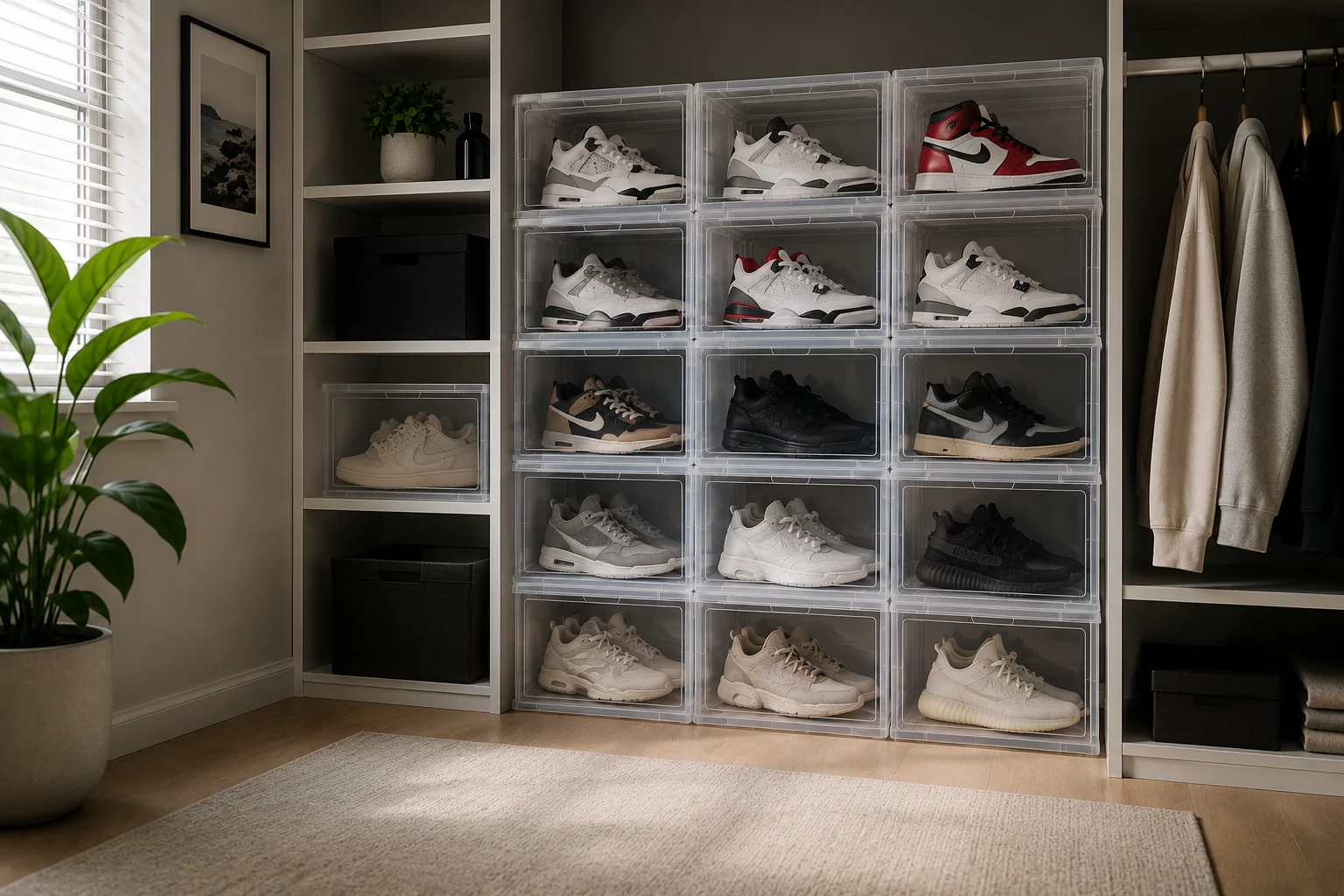
Temperature and humidity matter more than many collectors realize.
Ideal storage conditions
- Temperature between 60°F and 75°F (16°C–24°C)
- Low humidity
- No direct sunlight
- Good air circulation
- Stable indoor climate
A bedroom closet is usually much safer than a garage, basement, or attic, where heat and humidity fluctuate throughout the year.
Use Silica Gel Packs
Silica gel packets help absorb excess moisture inside storage containers. Moisture contributes to oxidation, mold, and adhesive breakdown.
Place one or two packets inside each shoe box or storage container. Replace or recharge them every few months according to the manufacturer’s instructions.
This inexpensive solution is one of the best long term sneaker preservation techniques available.
Should You Store Sneakers in Their Original Boxes?
Original boxes offer decent protection from dust and light, making them a good option for many collectors.
Advantages
- Protect against dust
- Reduce light exposure
- Maintain resale value
- Easy to stack
Drawbacks
- Limited airflow
- Difficult to identify pairs quickly
- Cardboard can absorb moisture in humid rooms
If using original boxes, adding silica gel packets improves moisture control.
Clear Storage Boxes vs. UV-Resistant Display Cases
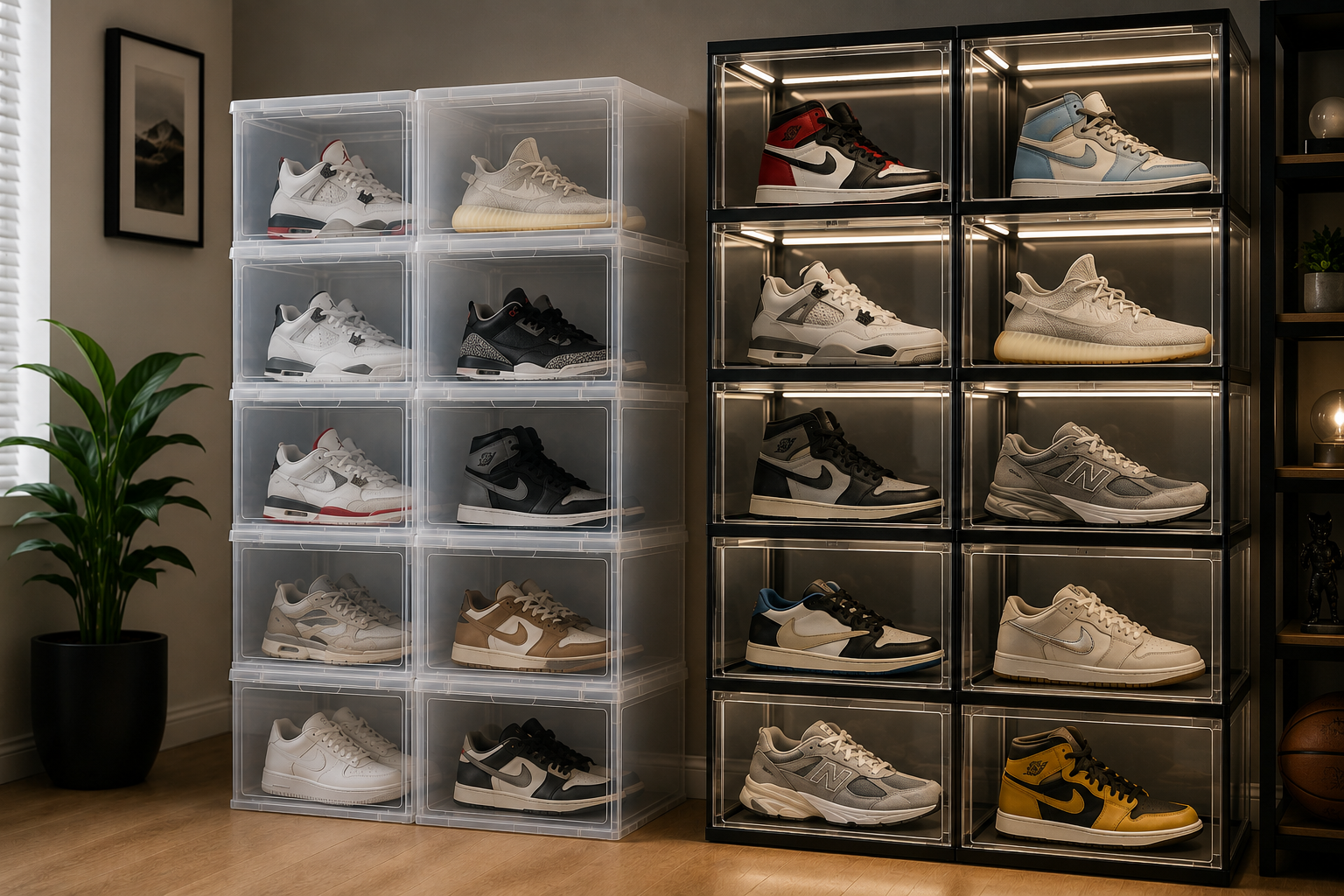
Many sneaker enthusiasts enjoy displaying their collections, but ordinary clear plastic boxes allow UV light to reach the shoes.
Regular clear boxes
- Easy organization
- Dust protection
- Affordable
- Less protection from sunlight
UV-resistant display boxes
- Reduce UV exposure
- Better for valuable collections
- Excellent visibility
- Ideal for long-term storage
If your collection is displayed near windows or bright rooms, UV-resistant cases are the safer investment.

Avoid Plastic Bags
Sealing sneakers inside ordinary plastic bags may trap moisture, creating conditions for mold and material degradation.
Instead, choose breathable storage methods or containers designed specifically for sneakers. If you need dust protection, use soft dust bags made from breathable fabric rather than airtight plastic.
Use Shoe Trees and Stuffing
Maintaining the shape of your sneakers is another important part of proper storage.
Cedar shoe trees work well for leather sneakers because they help absorb moisture while supporting the shoe’s structure.
For athletic sneakers, acid-free tissue paper is often enough to prevent toe-box creasing without placing excessive pressure on the upper.
Rotate Your Collection
Leaving one pair untouched for years isn’t always ideal.
Every few months:
- Inspect for moisture.
- Replace silica gel packets if needed.
- Air out the shoes briefly.
- Check adhesives and soles.
- Remove dust.
Regular inspections allow you to catch small issues before permanent yellowing or material damage develops.
Extra Sneaker Storage Ideas
If you own multiple pairs, organizing your collection properly makes maintenance much easier.
- Label storage boxes by model or color.
- Keep shelves away from windows.
- Store collectible pairs separately from daily wear.
- Avoid stacking heavy boxes on premium sneakers.
- Use humidity monitors in large collections.
- Keep storage areas clean and dust-free.
These simple sneaker storage ideas help protect both everyday shoes and valuable collectibles.
Common Storage Mistakes
- Leaving sneakers in direct sunlight.
- Storing dirty shoes.
- Keeping sneakers in hot garages.
- Ignoring humidity.
- Using airtight plastic bags.
- Allowing shoes to remain damp after cleaning.
Avoiding these mistakes significantly improves long term sneaker preservation and helps maintain the original appearance of your footwear.
Final Thoughts
Knowing how to store sneakers without yellowing comes down to controlling the environment around your shoes. Clean them before storage, minimize exposure to sunlight, keep humidity low, use silica gel packets, and choose quality storage containers that protect against dust and UV light. While no method can stop oxidation forever, proper storage dramatically slows the process and helps your favorite sneakers look newer for years.
Frequently Asked Questions
Can yellow sneaker soles be prevented completely?
No. Oxidation is a natural aging process that cannot be completely stopped. However, proper storage, limited UV exposure, low humidity, and regular maintenance can greatly slow yellowing and keep sneakers looking cleaner for much longer.
Should I keep sneakers in their original box?
Yes, original boxes provide good protection from dust and light. For even better results, add silica gel packets and store the boxes in a cool, dry location away from direct sunlight and excessive heat.
Do silica gel packets really help?
Yes. Silica gel absorbs excess moisture inside storage containers, helping reduce humidity that contributes to oxidation, mold growth, and adhesive deterioration. They’re inexpensive and highly recommended for sneaker collectors.
Is it okay to display sneakers on open shelves?
Open shelves are fine if they’re away from direct sunlight and excessive indoor heat. For valuable sneakers, UV-resistant display cases offer better long-term protection while still allowing you to showcase your collection.
How often should I check stored sneakers?
Inspect stored sneakers every three to six months. Check for moisture, dust buildup, sole discoloration, adhesive issues, and replace silica gel packets if necessary. Regular inspections help identify problems before they become permanent.
What Works Best for You?
How do you protect your sneaker collection from yellowing? Do you prefer original boxes, UV display cases, or another storage method? Share your favorite sneaker storage ideas and preservation tips with other readers.