How to Spot Fake Sneakers: 12 Easy Ways to Identify Authentic Pairs
Don't get burned by fakes. Learn how to authenticate popular sneakers like the Yeezy, Jordan 1, and Dunk — checking stitching, tags, box details, and sole texture.
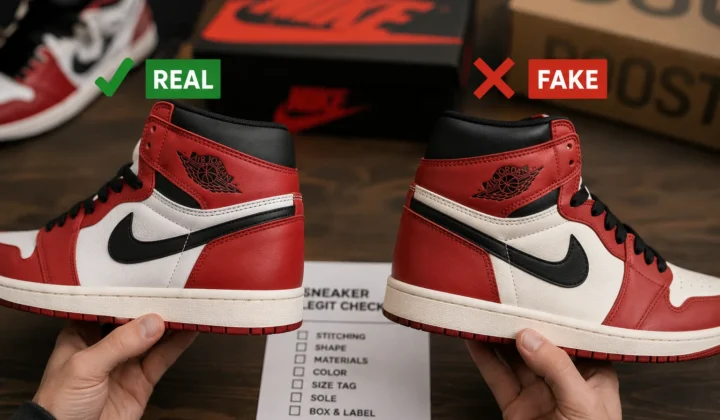
Buying limited-edition sneakers can be exciting, but it also comes with risks. Counterfeit shoes have become increasingly convincing, making it difficult for even experienced buyers to tell the difference between authentic and fake pairs. Whether you’re shopping for a pair of Jordan 1s, Nike Dunks, Yeezys, or another popular release, knowing how to spot fake sneakers can save you hundreds of dollars and prevent disappointment.
While no single detail guarantees authenticity, examining several features together gives you a much better chance of identifying counterfeit sneakers. Materials, stitching, labels, packaging, sole construction, and even the smell can reveal whether a pair is genuine. Learning these signs is especially important when buying from resale marketplaces or private sellers.
This guide explains the most reliable ways to authenticate sneakers, highlights the common differences between fake and genuine pairs, and shares practical buying tips that work across today’s most popular sneaker brands.
Quick Answer
The best way to spot fake sneakers is to inspect multiple details rather than relying on one feature. Compare the stitching, materials, shape, size tags, box labels, outsole pattern, and overall craftsmanship with verified authentic pairs. When in doubt, buy from trusted retailers or use a professional authenticate sneakers service before completing your purchase.
Why Fake Sneakers Are So Common
The popularity of limited sneaker releases has created a huge resale market where certain pairs sell for several times their retail price. High demand encourages counterfeit manufacturers to copy popular models, including:
- Air Jordan 1
- Nike Dunk Low
- Adidas Yeezy Boost
- Nike SB Dunk
- Travis Scott collaborations
- Off-White collaborations
Modern replicas often look convincing in online photos, making careful inspection more important than ever.
Check the Overall Shape First
Before focusing on tiny details, examine the sneaker’s overall appearance.
Authentic sneakers have consistent proportions, clean curves, and balanced construction. Counterfeit pairs often appear too bulky, too narrow, or slightly uneven.
Compare your pair with official product images and authenticated resale listings. If the silhouette looks noticeably different, that’s an early warning sign.
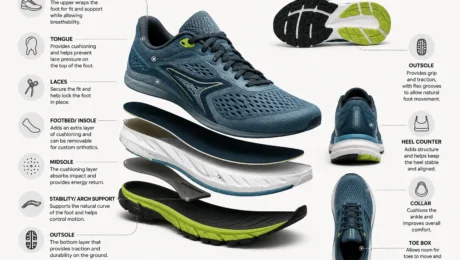
Inspect the Quality of the Materials
Premium sneakers use quality leather, suede, mesh, knit, or synthetic materials designed for durability.
Common signs of fake materials include:
- Plastic-like leather
- Cheap suede with little movement
- Thin or stiff fabric
- Uneven coloring
- Poor glue application
Authentic sneakers generally feel solid, while fake pairs may feel lightweight or unusually stiff.
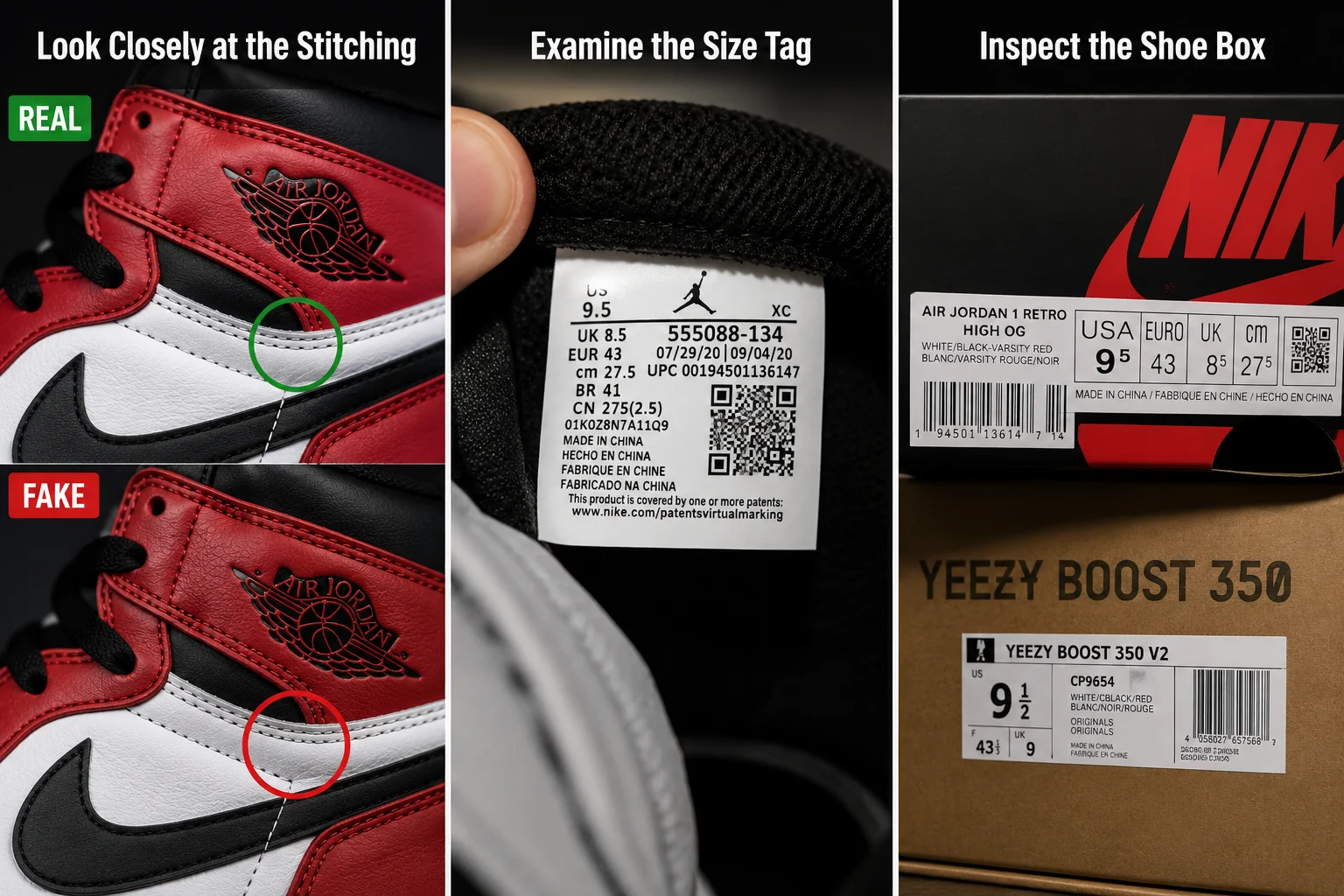
Look Closely at the Stitching
Stitching is one of the easiest ways to identify poor-quality replicas.
Genuine sneakers typically feature:
- Straight stitch lines
- Even spacing
- Consistent thread color
- Minimal loose threads
- Symmetrical construction
Counterfeit pairs often have crooked stitching, skipped stitches, or inconsistent spacing across both shoes.
Examine the Size Tag
The inside size label contains valuable information for anyone trying to authenticate sneakers.
Check:
- Font style
- Letter spacing
- Production dates
- Country of manufacture
- Style code
- QR code, if applicable
The style code printed on the shoe should exactly match the code printed on the shoe box.
Inspect the Shoe Box
Counterfeit manufacturers frequently overlook packaging details.
Look for:
- Correct logo placement
- Sharp printing quality
- Accurate product stickers
- Matching size information
- Proper color codes
- Strong box construction
Misspelled words, blurry labels, or incorrect product information are major red flags.
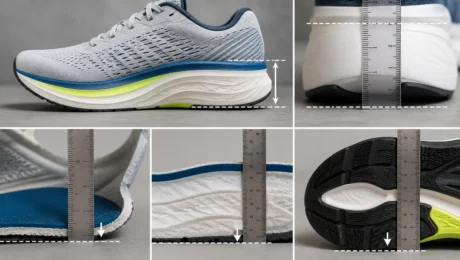
Check the Sole Pattern
The outsole often reveals differences that counterfeit factories fail to replicate accurately.
Compare:
- Tread pattern
- Rubber texture
- Color consistency
- Logo placement
- Mold quality
Authentic soles usually have crisp edges and precise molding, while fake soles may show rough finishing or shallow patterns.

Fake Jordan 1 vs Real
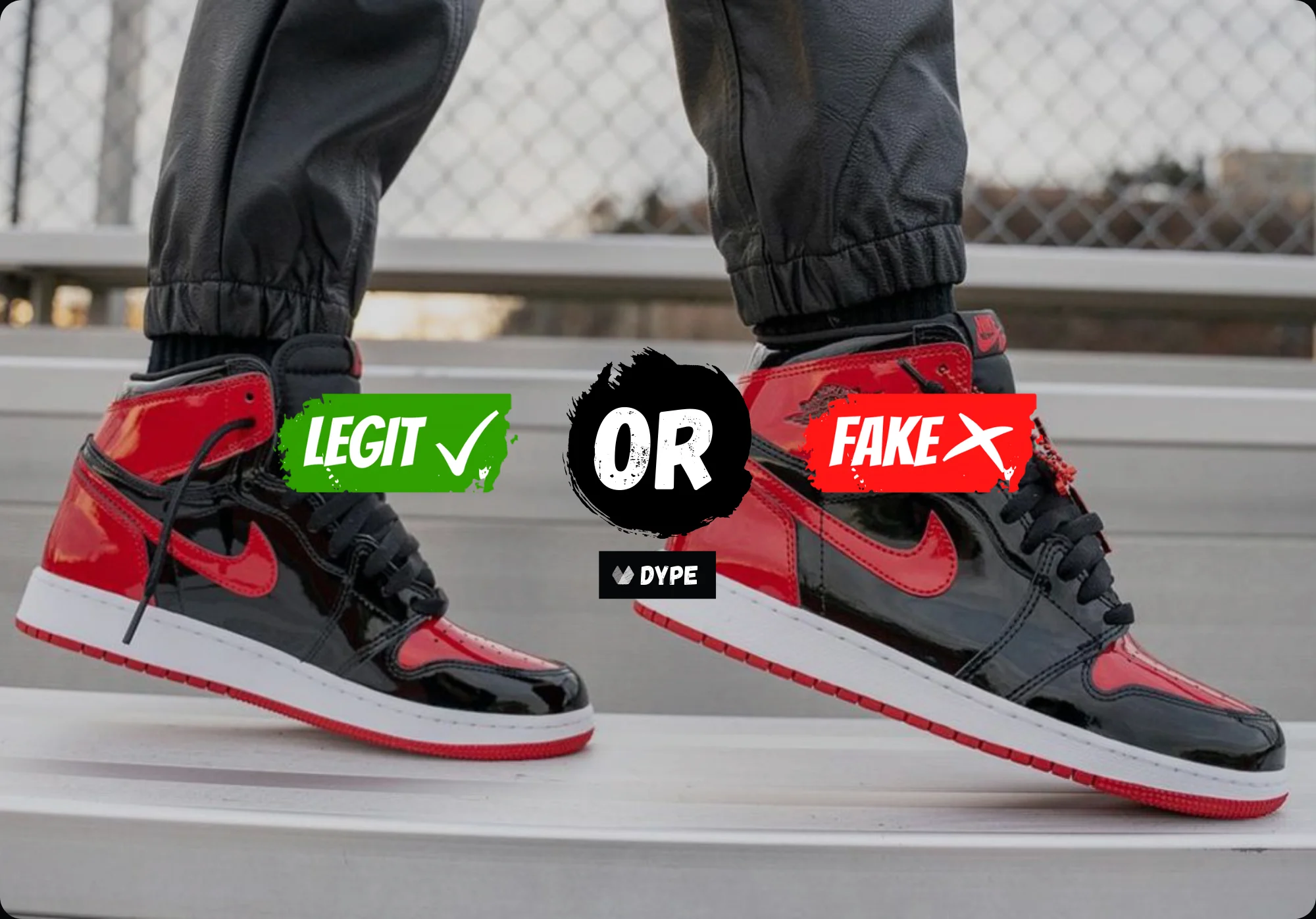
One of the most searched comparisons is fake Jordan 1 vs real, since the model remains one of the most counterfeited sneakers.
Heel Shape
Authentic Jordan 1s have a balanced heel with smooth curves. Fake pairs often have a wider or more rounded rear profile.
Wings Logo
The Wings logo should be sharp, deeply embossed, and clearly defined. Replicas frequently have blurry edges or incorrect sizing.
Swoosh Placement
The Nike Swoosh should have clean edges and proper positioning. A swoosh that’s too large, too small, or uneven is a warning sign.
Leather Quality
Real Jordan 1 leather usually feels more premium and develops natural creases. Counterfeit leather often feels artificial or overly smooth.
How to Legit Check Nike Dunks
Nike Dunk replicas have become increasingly accurate, but several details still help identify authentic pairs.
- Check toe box height and shape.
- Inspect heel embroidery for clean stitching.
- Verify tongue label placement.
- Compare outsole texture.
- Look for consistent leather grain.
A proper sneaker legit check guide always recommends comparing multiple features instead of relying on a single difference.
How to Authenticate Yeezys
Yeezy models include several unique features that help identify genuine pairs.
- Primeknit pattern should match official releases.
- Boost sole should have defined texture.
- Heel tabs must be evenly stitched.
- Pull tabs should be correctly positioned.
- Midsole transparency should match authentic pairs.
Because Yeezy replicas continue improving, comparing with verified authentic photos is highly recommended.
Smell Can Be a Clue
While not always reliable, authentic sneakers typically have the normal scent of fresh rubber and leather. Counterfeit shoes sometimes have a strong chemical odor caused by lower-quality adhesives and materials.
This alone isn’t enough to prove authenticity, but it can support other findings during inspection.
Buy From Trusted Sellers
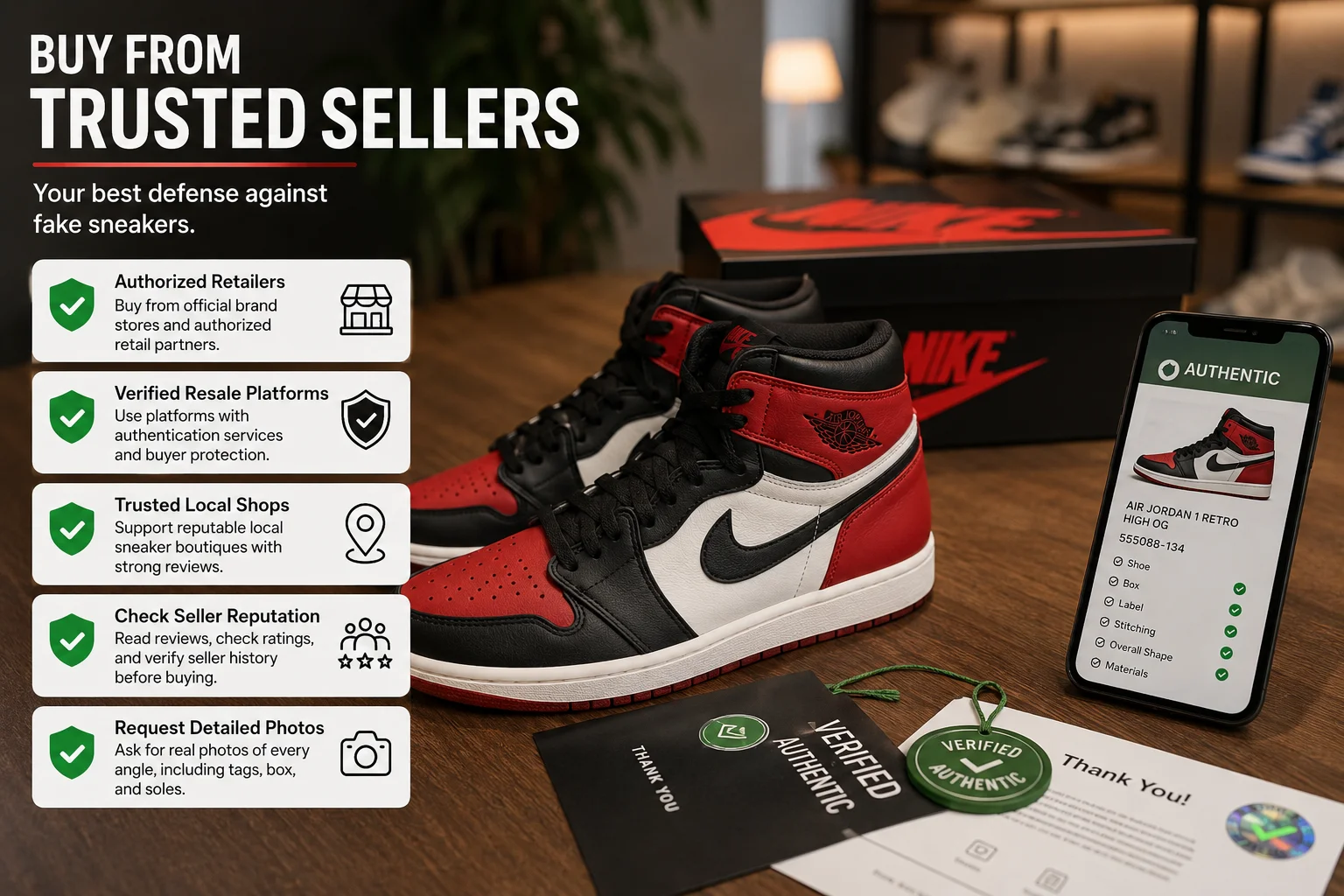
The easiest way to avoid counterfeit sneakers is to purchase from reputable sources.
Safer buying options include:
- Official brand stores
- Authorized retailers
- Verified resale platforms with authentication services
- Trusted local sneaker boutiques
If buying from an individual seller, request detailed photos of every angle, including the box label, size tag, insoles, outsole, and accessories.
Common Red Flags
- Price is dramatically below market value.
- Seller refuses to provide detailed photos.
- Product description is vague.
- Multiple sizes of a rare sneaker are available.
- Box information doesn’t match the shoes.
- Poor stitching or glue marks are visible.
- Seller has little or no transaction history.
Final Thoughts
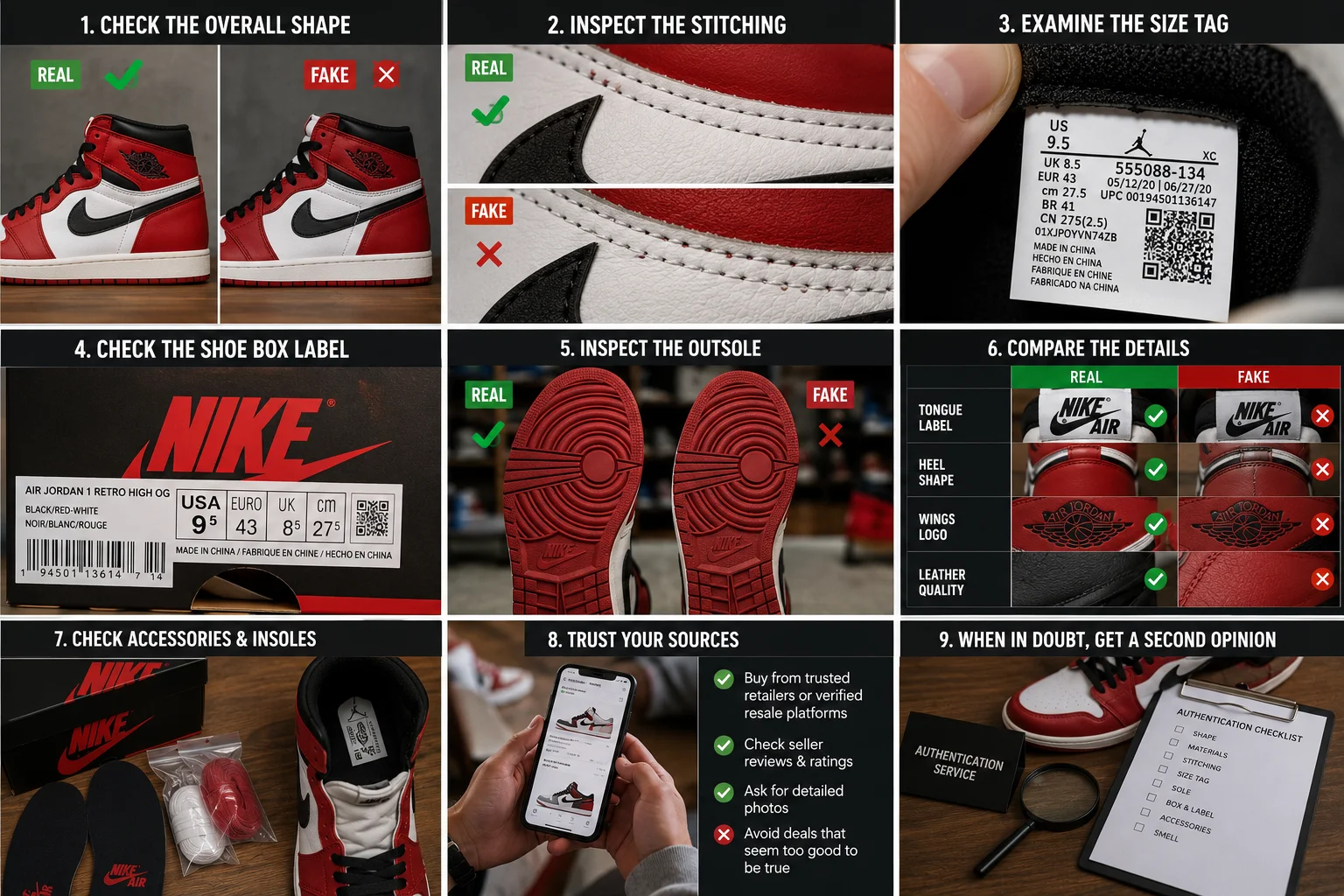
Learning how to spot fake sneakers takes practice, but inspecting several details together dramatically improves your chances of identifying counterfeit pairs. Focus on overall shape, materials, stitching, labels, packaging, and outsole construction instead of relying on a single feature.
Whether you’re comparing a fake Jordan 1 vs real, checking Nike Dunks, or performing a full sneaker legit check guide, patience and careful observation are your best tools. When you’re uncertain, it’s worth using an authentication service before spending your money.
Frequently Asked Questions
1. Can fake sneakers look exactly like real ones?
Some high-quality replicas are extremely convincing, especially in photos. However, close inspection usually reveals differences in materials, stitching, labels, sole construction, or packaging. Examining multiple details together offers the most accurate assessment.
2. Is the shoe box enough to verify authenticity?
No. Counterfeit manufacturers often copy packaging as well. While the box can reveal useful clues, it should always be checked alongside the shoe itself, including the size tag, materials, stitching, and outsole.
3. What’s the easiest way to authenticate sneakers?
Buying from authorized retailers or verified resale platforms with professional authentication remains the safest option. If purchasing secondhand, compare your pair with authenticated examples and inspect every major detail carefully.
4. Are all fake sneakers poor quality?
Not necessarily. Some replicas use better materials than others, making them harder to identify. Even so, authentic sneakers generally offer better quality control, durability, and long-term value.
5. Should I trust online photos alone?
No. Photos can hide flaws or be edited. Always request detailed close-up images of labels, stitching, soles, insoles, and the shoe box. If possible, inspect the sneakers in person before purchasing.
What Do You Think?
Have you ever accidentally bought fake sneakers, or do you have your own authentication tips? Share your experience and favorite legit-check methods in the comments below.