Best Running Shoes for Plantar Fasciitis in 2026
Running with plantar fasciitis is tough — but the right shoe helps. We picked the best running shoes with deep heel cups and arch support to reduce pain on every run.
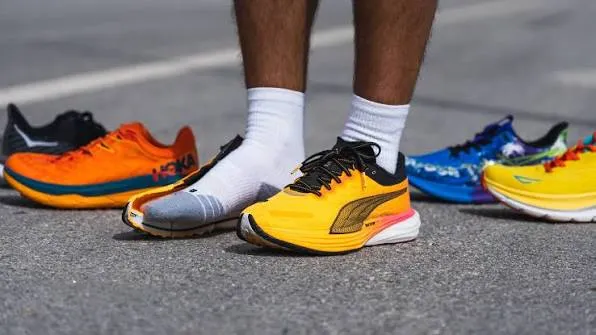
Plantar fasciitis is one of the most common — and most debilitating — running injuries, affecting the thick band of tissue that runs along the bottom of the foot connecting the heel bone to the toes. That sharp, stabbing heel pain first thing in the morning, or the dull ache that builds as your mileage increases, is a clear signal that the plantar fascia is under excessive stress. For runners, the right footwear is not just a comfort consideration — it’s a clinical one. Choosing the best running shoes for plantar fasciitis can meaningfully reduce pain, support recovery, and allow you to keep training without making the condition worse.
The key features to look for are deep heel cups that cradle and stabilise the rearfoot, generous arch support that reduces tension on the fascia, adequate cushioning to absorb ground impact, and a moderate heel-to-toe drop that takes strain off the Achilles and plantar tissue. This guide cuts through the noise to identify the best options available in 2026, along with the features that actually make a difference.
Read our Best Trail Running Shoes in 2026
What Are the Best Running Shoes for Plantar Fasciitis?
The best running shoes for plantar fasciitis combine deep heel cups, structured arch support, and cushioned midsoles to reduce fascia tension. Top picks include the ASICS Gel-Nimbus, HOKA Clifton, Brooks Ghost, and New Balance Fresh Foam 1080. Look for a heel-to-toe drop of 8–12mm, firm medial support, and ample rearfoot cushioning. Avoid minimalist or zero-drop shoes during active flare-ups.
What Makes a Running Shoe Good for Plantar Fasciitis?
Not all cushioned running shoes are created equal when it comes to plantar fasciitis. Understanding what to look for — and why — helps you evaluate options more precisely than relying on marketing claims alone.
Deep Heel Cup
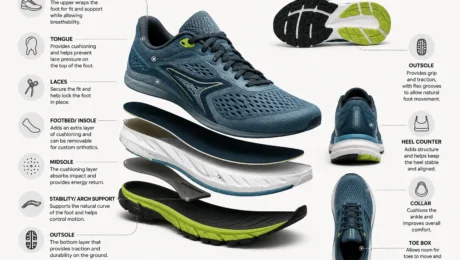
A deep, well-structured heel cup cradles the fat pad of the heel and holds it in place beneath the calcaneus (heel bone). This fat pad is your body’s natural shock absorber, and when it disperses laterally under impact, protection at the heel is reduced. Heel cup running shoes that contain and centralise this pad are significantly more effective at reducing plantar fascia loading on each footstrike. Look for reinforced heel counter construction — you should feel firm, structured resistance when you squeeze the heel of the shoe from either side.
Arch Support
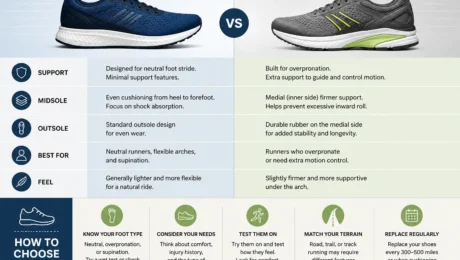
The plantar fascia runs from the heel to the ball of the foot, and when the arch collapses repeatedly under load — as it does in overpronators or those with flat feet — the fascia is stretched beyond its capacity. Arch support running shoes reduce this longitudinal strain by maintaining the foot’s structural arch through the gait cycle. This is why stability and motion control shoes are frequently recommended for plantar fasciitis sufferers, even in neutral foot types, when the condition is actively inflamed.
Midsole Cushioning
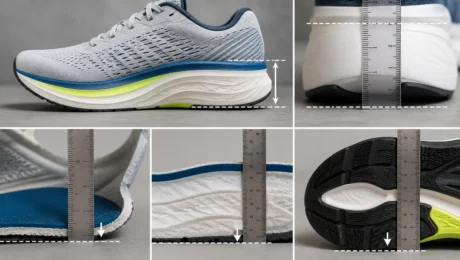
Every footstrike sends force up through the plantar fascia. A well-cushioned midsole — particularly at the heel — absorbs a meaningful portion of that force before it reaches the soft tissue. Maximalist cushioning designs, as pioneered by HOKA, have become especially popular among plantar fasciitis sufferers for this reason. Thicker foam stacks at the heel reduce peak impact forces without requiring any change in running form.
Heel-to-Toe Drop
A moderate to high heel-to-toe drop of 8–12mm is generally advised for runners managing plantar fasciitis. This elevation reduces the stretch placed on the Achilles tendon and plantar fascia during push-off and landing, lowering cumulative tissue stress across a run. Zero-drop and low-drop shoes dramatically increase the demand on both structures and are typically contraindicated during active plantar fasciitis flare-ups.
Our Read Best Running Shoes for Beginners in 2026
Best Running Shoes for Plantar Fasciitis: Top Picks for 2026
ASICS Gel-Nimbus
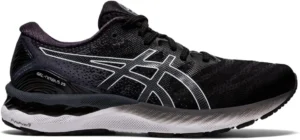
The ASICS Gel-Nimbus remains the gold standard recommendation for runners dealing with heel pain. Its gel technology at the rearfoot absorbs impact directly at the site of plantar fascia insertion, while its FF BLAST+ midsole provides a responsive yet cushioned ride throughout the rest of the foot. The Gel-Nimbus also features a structured heel counter and broad base that supports the arch and prevents excessive inward roll. It’s a clinician-recommended shoe that has appeared on podiatrist recommendation lists consistently for years — and its 2026 iteration continues to earn that reputation.
Best for: Runners who need maximum rearfoot protection, reliable arch support, and a long-run capable daily trainer.
HOKA Clifton
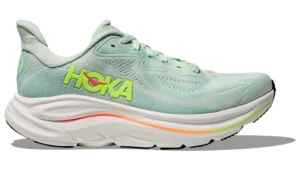
HOKA’s maximalist cushioning philosophy makes the Clifton a natural fit for plantar fasciitis sufferers. Its oversized EVA midsole stack provides exceptional impact attenuation at the heel, and the meta-rocker geometry promotes a smooth forward roll that reduces the sharp loading forces that aggravate plantar fascia inflammation. The Clifton sits at a 5mm drop, slightly lower than ideal for severe cases, but its sheer volume of cushioning compensates effectively for most runners. For those requiring a higher drop, the HOKA Bondi at 4mm offers even more midsole volume and a similarly protective ride.
Best for: Runners prioritising maximum heel cushioning, those logging high weekly mileage, and runners returning from injury.
Brooks Ghost
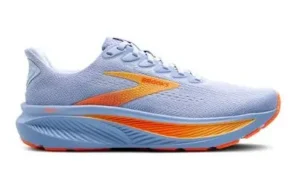
The Brooks Ghost is one of the most versatile and consistently recommended running shoes on the market, and its credentials for plantar fasciitis are well established. Its DNA Loft midsole delivers a plush, even cushion across the full foot length, while its BioMoGo DNA compound adapts to individual stride patterns over time. The Ghost’s structured heel counter provides meaningful rearfoot support, and its 12mm heel-to-toe drop is precisely in the range most beneficial for reducing Achilles and plantar fascia strain. It’s a shoe that works as well on recovery days as it does on long runs.
Best for: Runners who want a versatile, daily-use shoe with a proven heel pain reduction record and a high drop that protects the plantar fascia.
New Balance Fresh Foam 1080
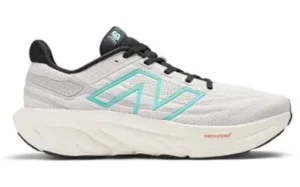
The New Balance Fresh Foam 1080 is built around a single-piece Fresh Foam X midsole that provides deep, consistent cushioning from heel to toe without pressure points. Its wide base and generous heel stack make it particularly effective for plantar fasciitis sufferers who struggle with prolonged time on feet, and its roomy toe box reduces forefoot compression that can contribute to altered gait and increased fascia tension. At an 8mm drop, it sits comfortably within the recommended range for plantar fasciitis footwear.
Best for: Long-distance runners, heavier runners needing reliable cushion depth, and those who benefit from a wider fit through the midfoot and forefoot.
Saucony Ride
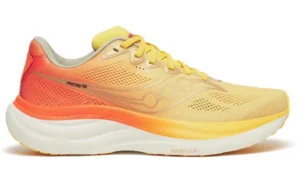
For runners who need plantar fasciitis footwear without a premium price tag, the Saucony Ride delivers impressive arch support running shoe credentials at a more accessible cost. Its PWRRUN midsole provides a balanced, cushioned ride, its heel geometry is well structured, and its 8mm drop suits runners managing heel pain. It lacks the sheer cushion volume of the HOKA or Gel-Nimbus but outperforms many competitors in its price bracket for plantar fascia support.
Best for: Budget-conscious runners who need genuine plantar fascia support without compromising on key protective features.
Should You Use Orthotics Alongside Running Shoes for Plantar Fasciitis?
For many runners, even the best plantar fasciitis footwear benefits from the addition of custom or semi-custom orthotics. While a well-chosen stability shoe addresses arch support and heel containment effectively, a podiatrist-prescribed orthotic can provide more targeted correction of the specific biomechanical issue — whether that’s overpronation, supination, or leg length discrepancy — that is driving plantar fascia overload in the first place.
If you’re considering orthotics, choose running shoes with a removable insole and a roomy enough footbed to accommodate the orthotic without compressing the upper against your foot. The ASICS Gel-Nimbus and New Balance Fresh Foam 1080 are both particularly accommodating in this regard.